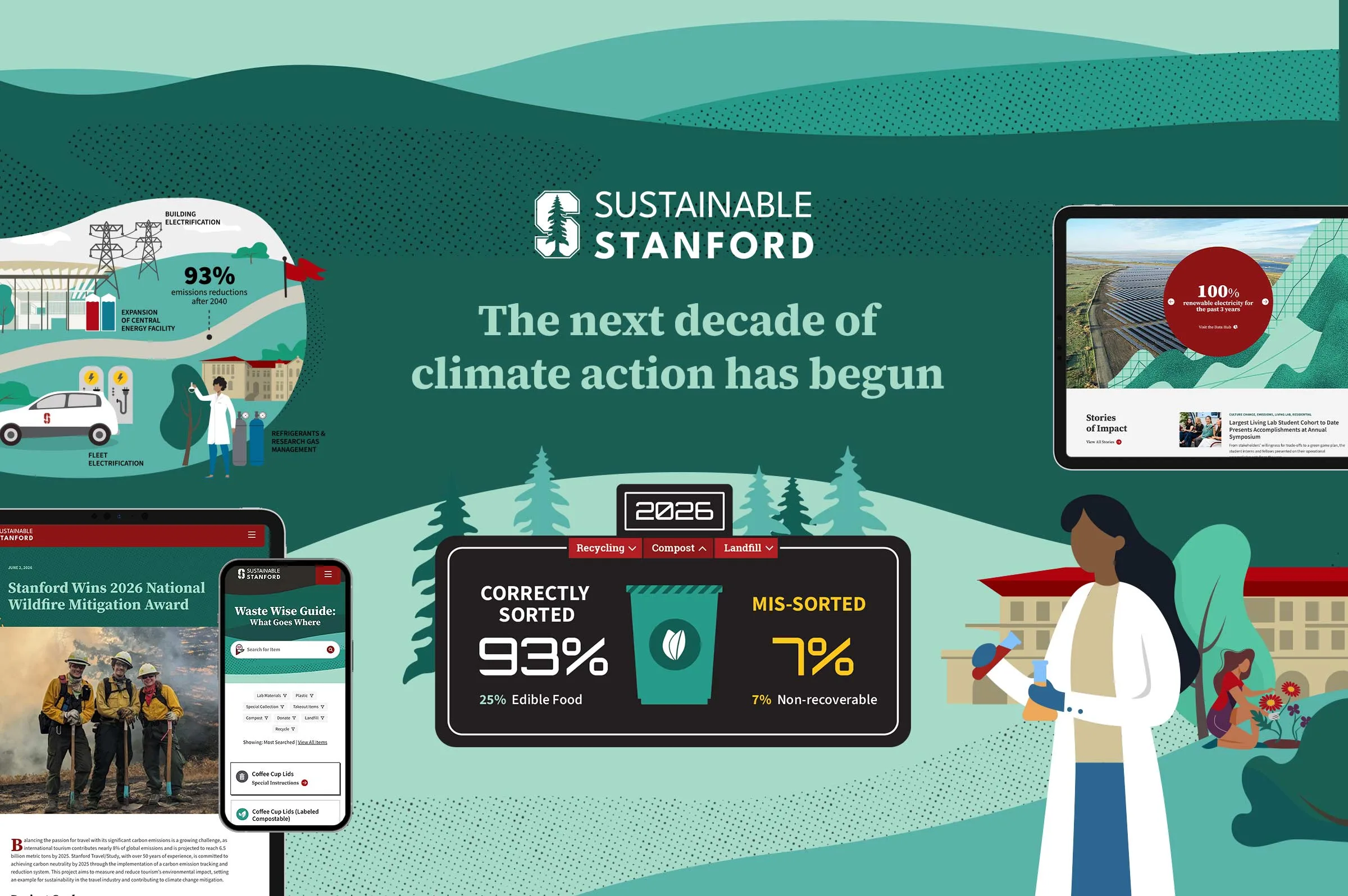
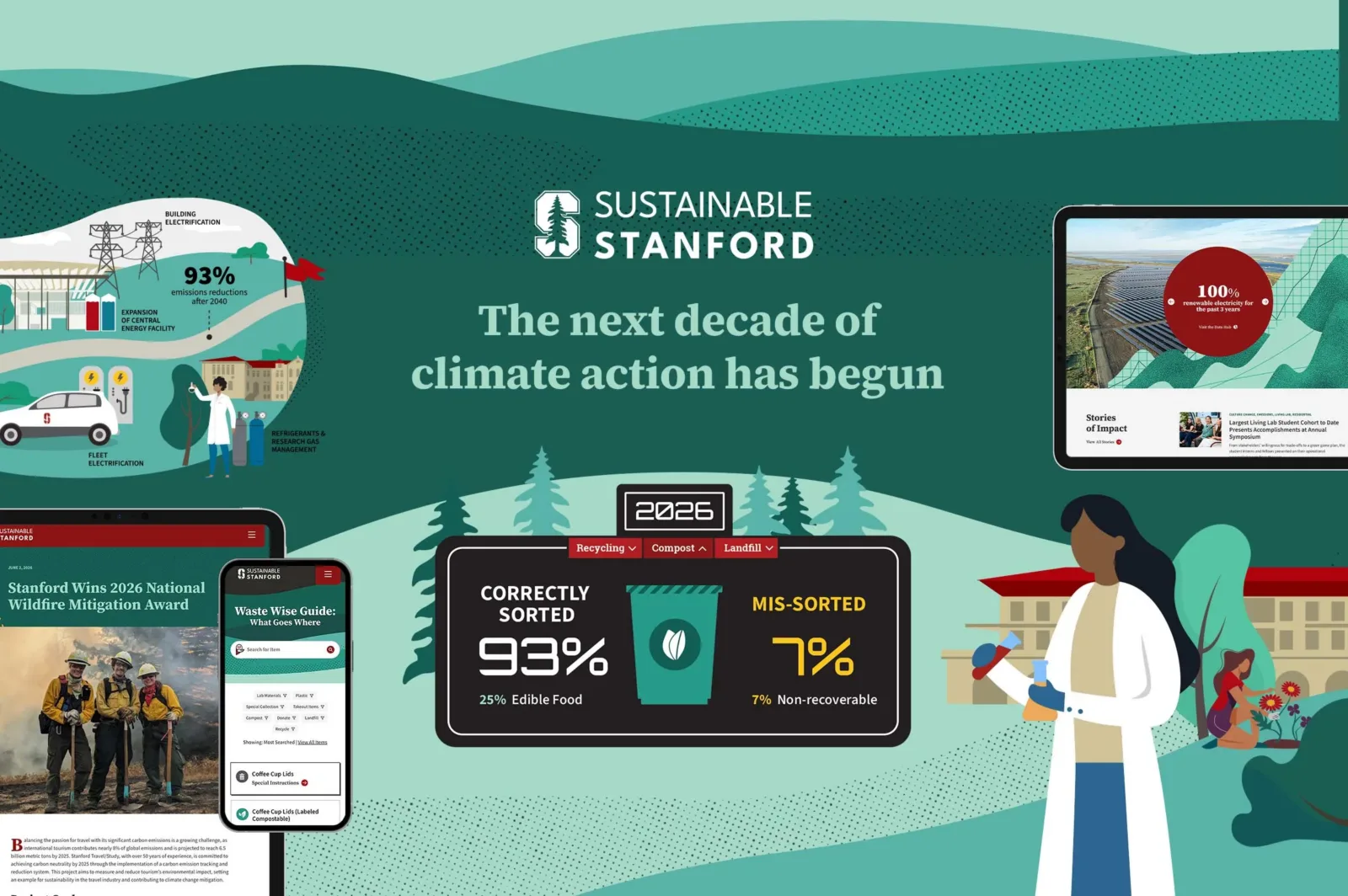
When Spreadsheets Have Stories to Tell
Client: Ongoing Digital and Brand Partnership for a University Sustainability Department since 2013. Active monthly retainer.
Services:
- Sub-brand identity
- WordPress website design & development
- Data consultation and interactive data visualizations
- Illustration and infographic design
- Communication strategy
- Waste-sorting tool application
Results: One flagship website with multiple linked tools — including an interactive Data Hub, a Waste-sorting tool, and Year in Review microsites.
The Relationship
Sustainable Stanford’s website is the product of years of collaboration. Since 2013, openbox9 designed and built the digital tools that communicate Stanford’s sustainability leadership — work that spans cross-departmental data, competing internal stakeholders, and an audience ranging from prospective students to leading sustainability researchers.
As Stanford accomplishes goals and expands its work, new needs surface, new tools are added to the ecosystem, and ideas are developed. openbox9’s role has evolved from an initial website build into an ongoing digital and brand partner that offers a listening ear and creative proactive ideas alongside caring for and expanding the full toolset Sustainable Stanford uses to tell the story of sustainability across campus.


Strategic Foundation
As part of a storied institution, Sustainable Stanford needed an identity that could stand on its own while staying visibly connected to Stanford’s master brand. openbox9 worked within the framework of the parent brand guidelines to build a distinct sub-brand — its own color palette, illustration style, and iconography (a system of shapes, figures, lines, and patterns) — that reads as unmistakably Stanford while carrying its own personality.
Through in-depth interviews, research, and strategic mapping, openbox9 translated a genuinely complex, cross-departmental operation — spanning energy, water, transportation, food systems, and academic research — into a coherent visual and content strategy. Every new tool or microsite added since has been built to extend that same foundation so the growing ecosystem feels like one connected effort.
Brand Management
openbox9 maintains Sustainable Stanford’s sub-brand system: a custom color palette, an illustration style built from hand-drawn sketches, textures and patterns, and supporting iconography. The system is deliberately built to flex — new illustrations, topics, and applications are produced within the same visual language so that whether a user lands on the main site, the Data Hub, views a presentation, or engages with a print piece, it reads as one continuous brand.


Website
The Sustainable Stanford website features an animated homepage and content areas custom-built for different audiences — students, staff, researchers. Tools extend the site’s core mission: a Data Hub that turns a broad set of sustainability metrics into clean, well-labeled charts and explorable trends, a “How the heck do I dispose of this?” waste-sorting guide that makes correct disposal simple, and a separate section for Climate Action Plan that tracks progress toward goals. Each feature required its own goals, information structures, database systems, and user experience design developed through iterative prototyping — from detailed spreadsheets to workflow diagrams — before becoming user-facing tools. Accessibility standards are built by design, considered from the early Information Architecture diagrams and carried through visual design systems and custom code implementation, as well as a user-friendly admin experience so the Stanford team can carry out best practices.

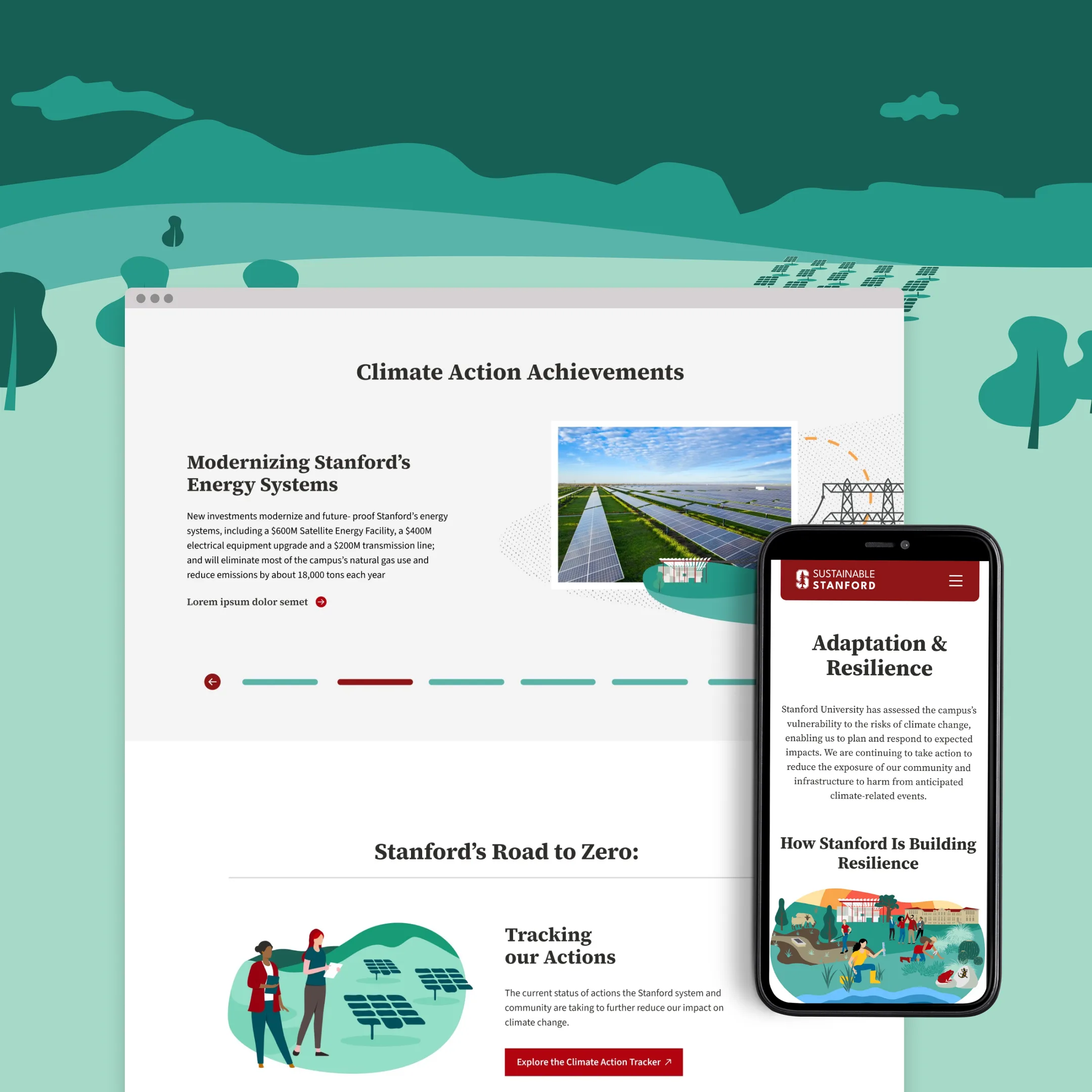



Content & Communication Strategy
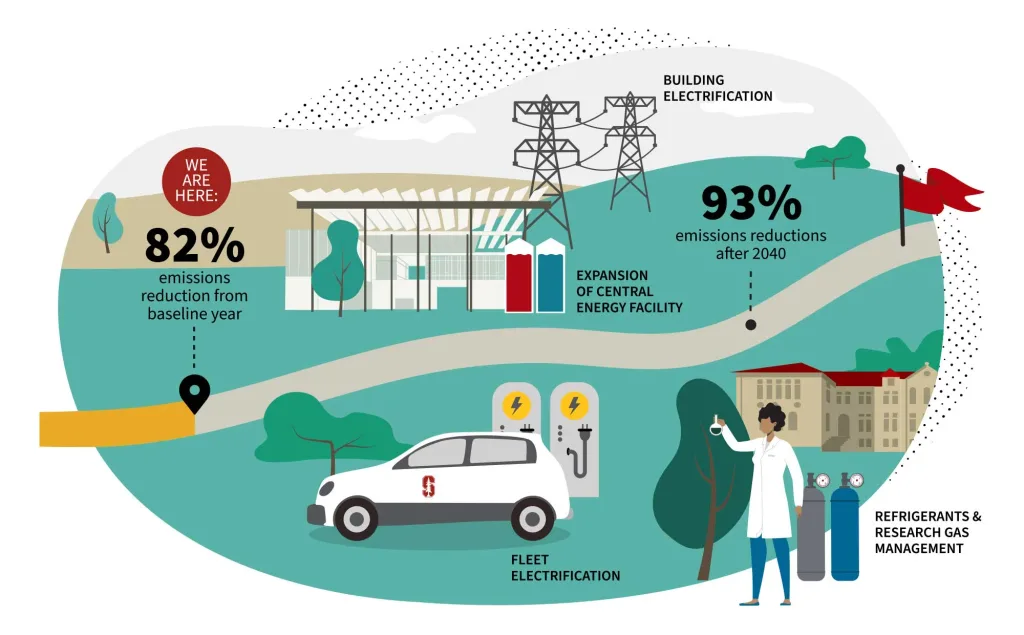
openbox9’s content strategy centers on translating a technically dense, interconnected sustainability system into stories a general audience can follow without losing the depth that researchers and staff need. Custom illustrations and infographics — grounded in research rather than decorative — were developed through sketches and written narratives to capture both the main message and the supporting nuance of each topic. They showcase the literal wiring and piping as well as movement of people and good across campus to show how institutional commitments are put into action. Content areas are built around distinct audience roles rather than a single generic visitor, reflecting the site’s “there’s a role for everyone” in building a sustainable community – whether a building manager, lab researcher, or undergraduate student.


Data Consultation & Visualization
Stanford has extensive data sets that can tell many different types of stories about progress over time. openbox9 sifted through all the puzzle pieces to fit together a beautiful and engaging presentation that offers benefit to both cursory lookers and deep-dive explorers. We continue to wrangle data sets into visual storytelling that shows how Stanford’s work progresses, and to provide peer institutions and researchers with insights that will advance future work.


Results Over Time
- Digital and brand partner since 2013
- Sub-brand identity system developed and extended across all properties
- Annual year-in-review microsites and custom themed artwork
- Growing library of infographics, offline graphics for communication initiatives
- Evolution and maintenance of a sustainability Data Hub, offering strategic advice on how to use data for messaging.
- Waste Sorting tool users can turn to in-the-moment to know how to dispose of specific objects in their hand
- Continued planned expansion, including additional data tools, video series, and interactive infographics
“It’s exactly – no – even better than I envisioned. You did an incredible job visualizing so much information. It’s very clear and easy to understand now. We are grateful to call Openbox9 our design team!”
Cara Uy-Segal, Associate Director of Sustainability Communications & Engagement at Stanford University

How to get your audience to care about your data
Openbox9 is a reliable data wrangler, turning complex spreadsheets into clear and compelling points.
Services: Branding | Digital
Sector: Sustainability | Education
Since: Ongoing services since 2013